Category: Silver Investing for Beginners

Silver IRA and silver Investing for beginners: Step-by-Step Guide shows you how to compliantly rollover your specific accounts, silver investment allocation in a retirement portfolio, and more.

  • Are Gold IRA Company Free Silver Promotions Really Free?

    Are Gold IRA Company Free Silver Promotions Really Free?

    Are Gold IRA Company Free Silver Promotions Truly Free?
    Are Gold IRA Company Free Silver Promotions Truly Free?

    Quick Summary: The Free Silver Catch

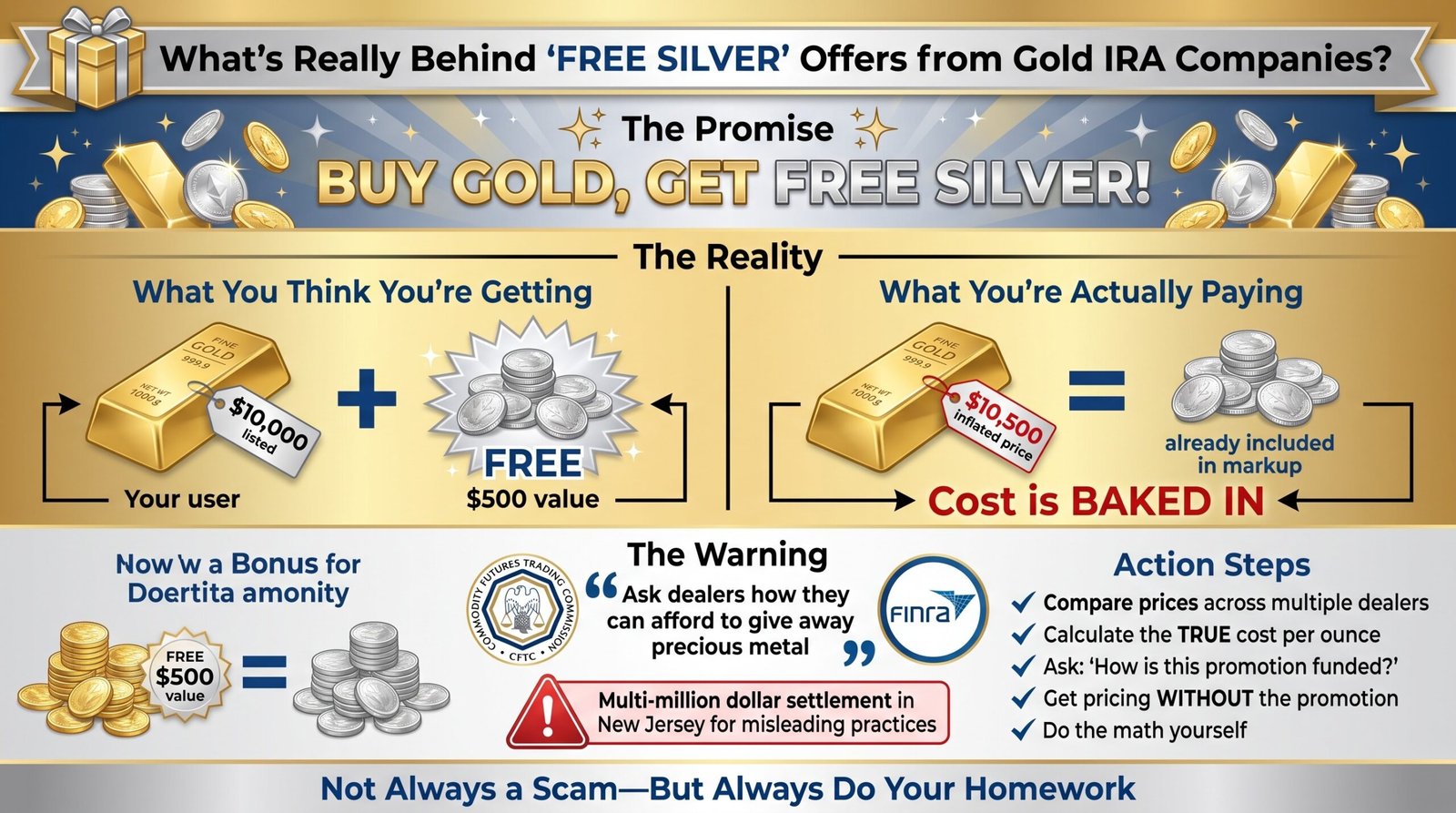
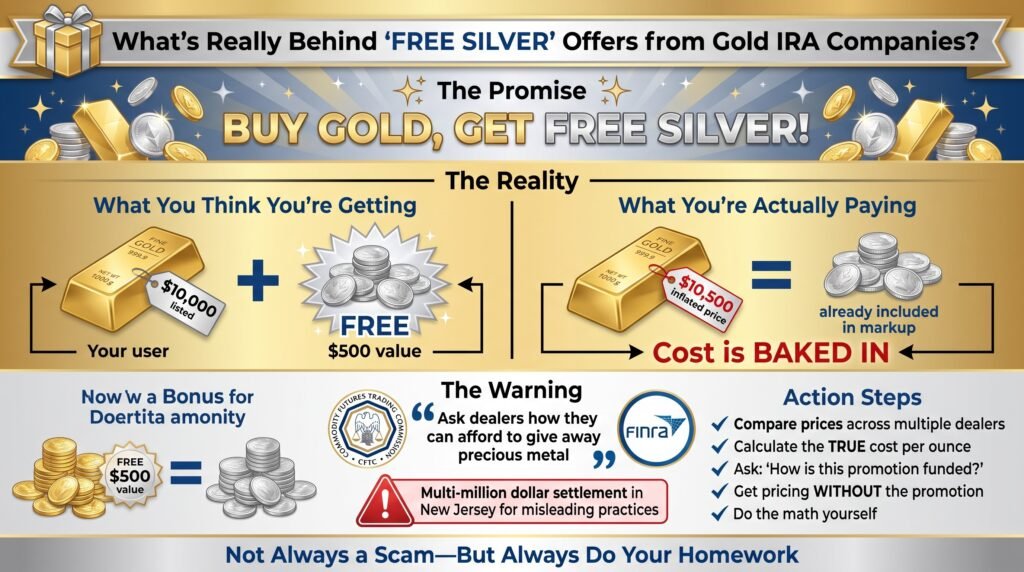
    Before diving into the mechanics, here’s the short version: free silver offers are real, but they’re not gifts. They’re pricing structures where a dealer inflates the cost of what you’re buying to cover the “bonus” they’re handing you.

    The CFTC and FINRA have jointly warned investors to ask dealers directly how they can afford to give away precious metal, because the honest answer is always the same: it’s baked into your purchase price.

    Regulators have also taken action against companies using these bonus structures in misleading ways, including a multi-million-dollar settlement in New Jersey.

    None of this means free silver offers are automatically scams, but it does mean you need to run the math yourself before accepting one.

    Table of Contents

    1. 8 Steps to Check If a Free Silver Offer Is Really Worth It
    2. When You Should Say No to a Free Silver Deal
    3. How Flat Fees Quietly Drain Smaller Accounts
    4. 5 Mistakes That Turn a Deal Into a Loss
    5. The Bottom Line: Free Silver Isn’t Free, It’s a Trade
    6. The Case for a Reputable Gold IRA Company
    7. Frequently Asked Questions

    8 Steps to Check If a Free Silver Offer Is Really Worth It

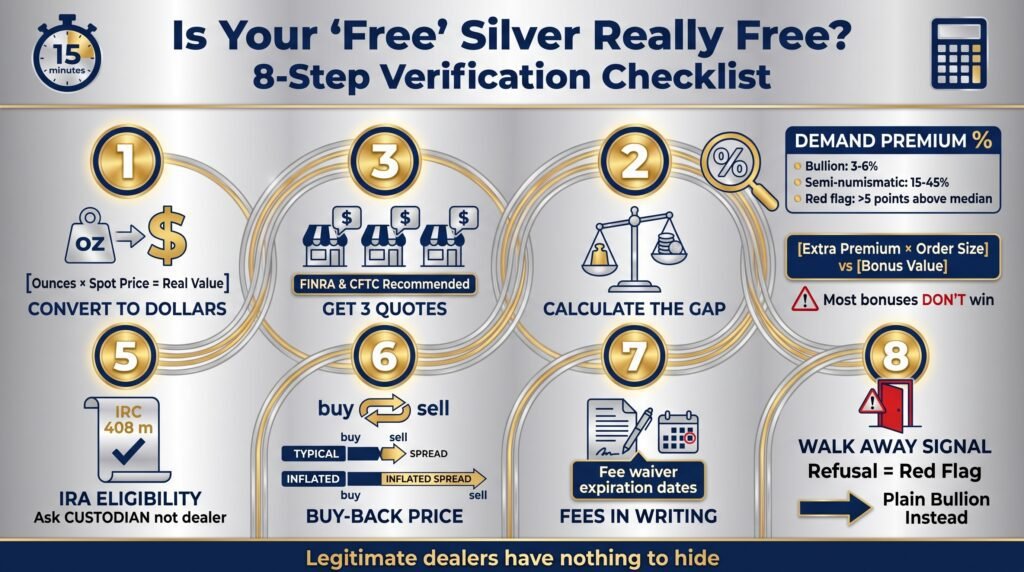
    Running the numbers on a free silver offer doesn’t require a finance degree. It takes about fifteen minutes and a handful of direct questions to the dealer. Here’s the process worth following every time.

    1. Convert the Bonus to Dollars, Not Ounces

    Start by multiplying the bonus quantity by the current spot price of silver. A “free” bonus advertised in ounces sounds impressive, but converting it to a dollar figure gives you something concrete to compare against the extra premium you’re being asked to pay.

    2. Demand the Raw Premium Percentage

    Ask the dealer for the exact percentage markup over spot on every coin in the bundle, not just a vague reassurance that the pricing is “fair” or “competitive.” A dealer who can’t or won’t give you a straight percentage is avoiding the one number that actually tells you what you’re paying for.

    • Bullion coins: expect roughly 3-6% over spot
    • Premium or semi-numismatic coins: expect 15-45% over spot, sometimes higher
    • Anything marketed as rare, graded, or exclusive: ask for the exact number, don’t assume

    If the premium on a bundled coin lands more than five points above the median premium for that type of coin elsewhere, treat it as a flag that the bundle is inflated to cover the bonus.

    3. Get Quotes From Two Other Dealers the Same Day

    Call or request written quotes from at least two other dealers for the identical coins and quantities, ideally on the same day since spot prices shift. This single step exposes inflated bundles faster than almost anything else, because a fairly priced offer will look similar across multiple dealers, while an inflated one will stand out immediately.

    FINRA and the CFTC specifically recommend this comparison step as a baseline defense against misleading precious-metals pricing.

    4. Calculate the Premium Gap

    Multiply the extra premium points by your total order size, then compare that number directly against the dollar value of the bonus you calculated in step one. If the extra premium costs more than the bonus is worth, and in most real-world examples it does, you’re not getting a deal; you’re funding your own gift.

    5. Confirm IRA Eligibility in Writing

    Ask the custodian, not just the dealer, to confirm in writing that every coin in the bundle qualifies under IRC 408(m). Custodians have no incentive to misrepresent eligibility the way a commission-driven salesperson might, which makes this step an important independent check.

    If a dealer resists involving the custodian in this conversation, that resistance alone is worth paying attention to.

    6. Ask for a Buy-Back Price on Everything

    Request the dealer’s buy-back price on every single item in the bundle, including the “free” silver.

    A coin that’s expensive to buy but cheap to sell back tells you everything about where the real markup is hiding.

    Bullion coins typically clear at published, predictable spreads, while premium coins often have thin resale markets that don’t reflect what you originally paid.

    7. Get Every Fee and Waiver Deadline in Writing

    Before signing anything, get a complete written list of every fee, cost, commission, and the full agreed retail price. Pay close attention to any fee waivers tied to the promotion, and get the exact date each waiver expires along with what the fee becomes afterward.

    A waived first-year fee that quietly reactivates in year two is a common way bonus offers claw back their value over time.

    8. Walk Away If Any Step Gets Refused

    If a dealer refuses to provide a straight answer at any point in this process, whether it’s the raw premium percentage, the buy-back price, or written fee disclosures, that refusal is itself the answer.

    A legitimate dealer selling a reasonably priced product has no reason to hide these numbers from you. At that point, the better move is usually to request a plain bullion order at published market premiums instead of the bundled promotion.

    Plain bullion remains the most straightforward and defensible way to hold precious metals in an IRA, free silver bonus or not.

    When You Should Say No to a Free Silver Deal

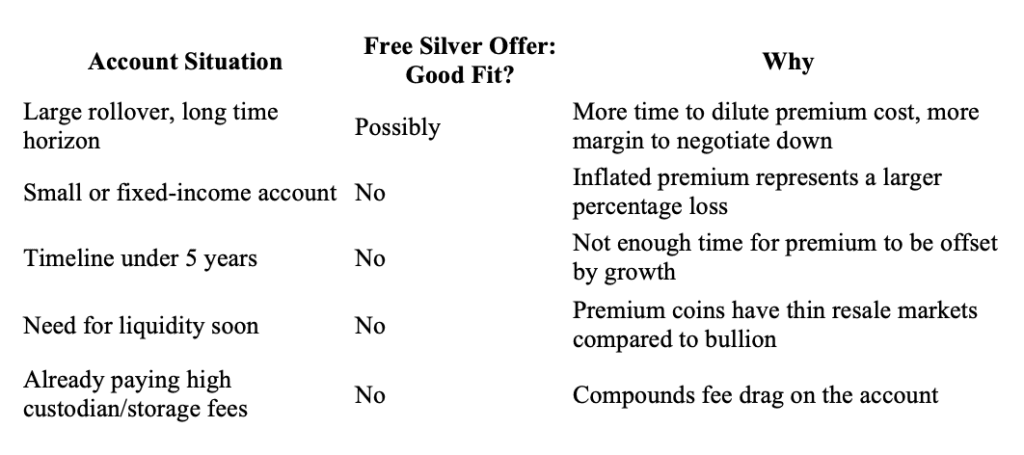
    Free silver promotions aren’t universally bad, but they’re a poor fit for certain investors and certain situations. Knowing which category you fall into before you’re on a sales call saves you from a decision you can’t easily undo.

    The common thread across all of these situations is that the hidden premium cost lands hardest on people with the least room to absorb it.

    Small or Fixed-Income Accounts

    Every extra dollar of inflated premium on a small or fixed-income account hits your recurring retirement income later, when you can least afford it. A bundled premium of $10,000 on an account that only holds $50,000 or $60,000 total represents a large, permanent loss relative to the account’s overall size, not a minor rounding error.

    Short Investment Timelines Under 5 Years

    If you’re planning to start taking distributions within five years or less, a free silver bonus is especially risky.

    Dealer premium on premium coins never has time to get diluted by market appreciation over a short horizon, which means you’re far more likely to sell at or near the inflated price you paid rather than recovering it through growth.

    If You May Need Cash Fast

    Buyers who might need liquidity sooner rather than later should think carefully before accepting a premium-heavy bonus bundle.

    Premium-priced coins typically have thin resale markets, while standard bullion coins clear at published, predictable spreads.

    Selling into the bid side of the market only recovers the metal’s spot value, not the premium you originally paid, so liquidity needs and premium coins don’t mix well.

    Accounts Already Stretched by Fees

    If your account is already carrying noticeable custodian and storage fees, adding a heavy front-end premium on top compounds the problem rather than offsetting it.

    Recurring fees erode small accounts faster in percentage terms than large ones, and layering an inflated coin premium onto an already fee-stretched account accelerates that erosion even further.
    How Flat Fees Quietly Drain Smaller Accounts

    Most Gold IRA providers charge flat dollar fees rather than percentage-based ones, covering account setup, annual custodian services, and metal storage. That flat structure sounds fair on paper, but it hits accounts of different sizes very differently.

    The math here isn’t complicated, but it’s easy to overlook when you’re focused on the excitement of a free silver bonus. A flat fee takes a much bigger bite out of a smaller balance than it does out of a larger one, and that gap compounds year after year as the fee keeps getting charged.

    Combine that fee drag with an inflated premium from a bonus bundle, and you’ve got two separate forces working against the same small account at the same time. Neither one shows up clearly until you actually run the numbers side by side.

    • Setup fees, annual custodian fees, and storage fees are typically charged as flat dollar amounts, not percentages
    • Fee amounts vary by provider and are often not published upfront
    • Custodian, storage, and administration fees continue reducing your account balance every single year it’s open
    • Smaller accounts feel the same flat fee as a much bigger percentage loss

    Why a $225 Fee Hurts a $10,000 Account More Than a $100,000 One

    Here’s a concrete example. A $225 annual fee represents 2.25% of a $10,000 account, but only 0.22% of a $100,000 account. That’s a ten-times difference in the real-world impact of the exact same dollar fee, depending entirely on how large your account is when the fee gets charged.

    How a 5-Point Efficiency Drop Costs You $2,500 on $50,000

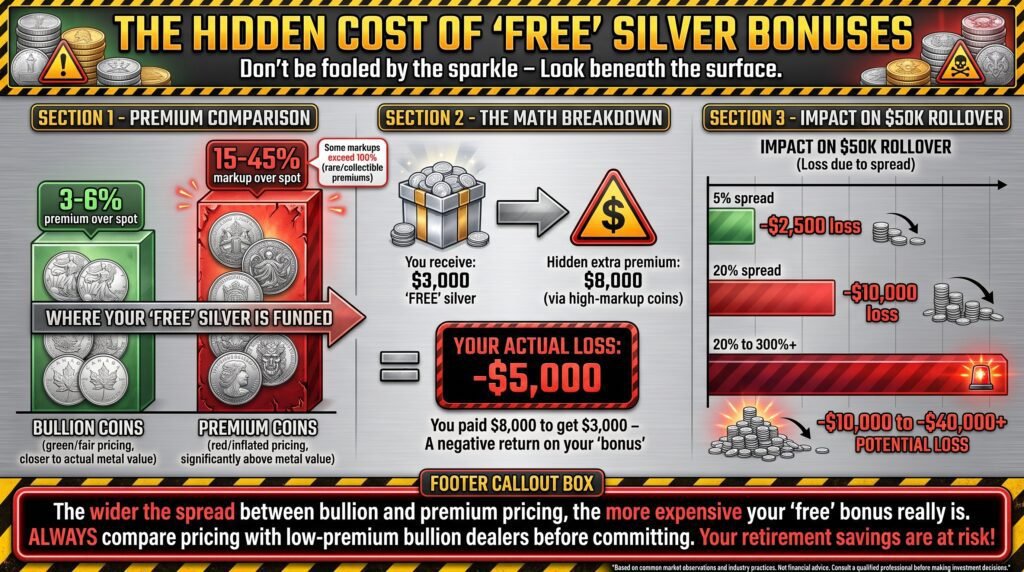
    Pricing inefficiency works the same way, just on a bigger scale. On a $50,000 rollover, a five-point drop in pricing efficiency, meaning you paid five percentage points more in premium than you needed to, eliminates $2,500 worth of metal from your account.

    A twenty-point drop eliminates $10,000. These aren’t hypothetical numbers; they’re the direct result of choosing a premium coin bundle over plain bullion pricing.

    $50,000 rollover example: a 5-point premium gap costs you $2,500 in lost metal. A 20-point gap costs you $10,000. That’s money gone before your investment has a chance to grow.

    Run both of these calculations side by side, the flat fee percentage and the premium efficiency gap, before accepting any bonus offer. Together they tell you whether a free silver promotion is actually putting you ahead or quietly putting you behind.
    5 Mistakes That Turn a Deal Into a Loss
    5 Mistakes That Turn a Deal Into a Loss

    5 Mistakes That Turn a Deal Into a Loss

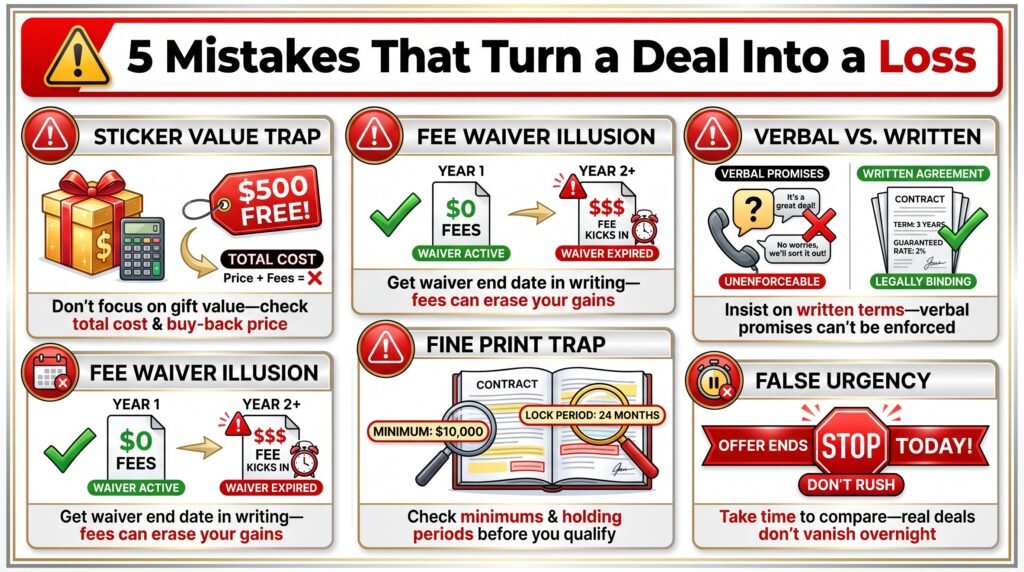
    Even cautious investors fall into a handful of predictable traps when evaluating free silver promotions. These mistakes tend to repeat across dealers and offers, so it’s worth memorizing them before you ever pick up the phone.

    1. Focusing on the Gift’s Sticker Value

    It’s easy to get fixated on the advertised value of the free silver instead of looking at the total price you’re paying and the buy-back price you’d receive later. The sticker value of the bonus is designed to catch your attention, not to tell you whether the overall deal makes financial sense.

    Total cost and buy-back price are the two numbers that actually matter. Everything else is framing.

    2. Assuming a Fee Waiver Lasts Forever

    Many promotions include a waived first-year fee bundled in with the free silver offer. The mistake is assuming that waiver is permanent instead of checking exactly when it expires and what the fee becomes once it reactivates.

    Get the exact waiver end date in writing, along with the fee amount that kicks in afterward. A waiver that quietly ends in month thirteen can erase a chunk of the value you thought you were getting from the original promotion

    3. Skipping the Fine Print on Minimums and Holding Periods

    Some free silver offers require a minimum purchase amount or a minimum holding period before the bonus actually becomes yours.

    Skipping this fine print means you might not qualify for what you thought you signed up for, or you might be locked into holding metal longer than you planned just to keep the bonus.

    4. Accepting Verbal Terms Instead of Written Ones

    A salesperson explaining the terms of an offer over the phone is not the same as having those terms in writing. Verbal promises are easy to make and difficult to enforce, especially months later when a fee reactivates or a buy-back price turns out to be lower than expected.

    Always insist on getting the complete offer, fees, premiums, and buy-back terms, in writing before you commit any money.

    5. Rushing Because the Offer “Ends Soon”

    Urgency is a sales tool, not a financial reality. Deciding quickly because an offer claims to be ending soon short-circuits the comparison shopping and math-checking process that actually protects your retirement savings.

    A reasonably priced offer will still be reasonably priced next week. If a dealer won’t let you take even a day or two to verify the numbers, that pressure alone tells you something important about the deal.

    The Bottom Line: Free Silver Isn’t Free, It’s a Trade

    Free silver promotions aren’t scams by default, but they’re never truly free either. Every ounce of bonus silver is funded by markup somewhere in your purchase, and your job as the investor is to figure out exactly how much that markup costs before you agree to it.

    Run the five-step math check, get everything in writing, confirm IRA eligibility with your custodian directly, and you’ll know within minutes whether a specific offer is a reasonable trade or an expensive mistake dressed up as a gift.

    To learn more about “free” silver trick dealers don’t explain,5 sales pitches that should raise a red flag, and more, read the detailed article here.

    Click the banner below to receive a free gold IRA integrity checklist from their official site. Fill out their short contact form to get started.

    Positioning Yourself- The Case for a Gold IRA
    Positioning Yourself- The Case for a Gold IRA

    The Case for a Reputable Gold IRA Company

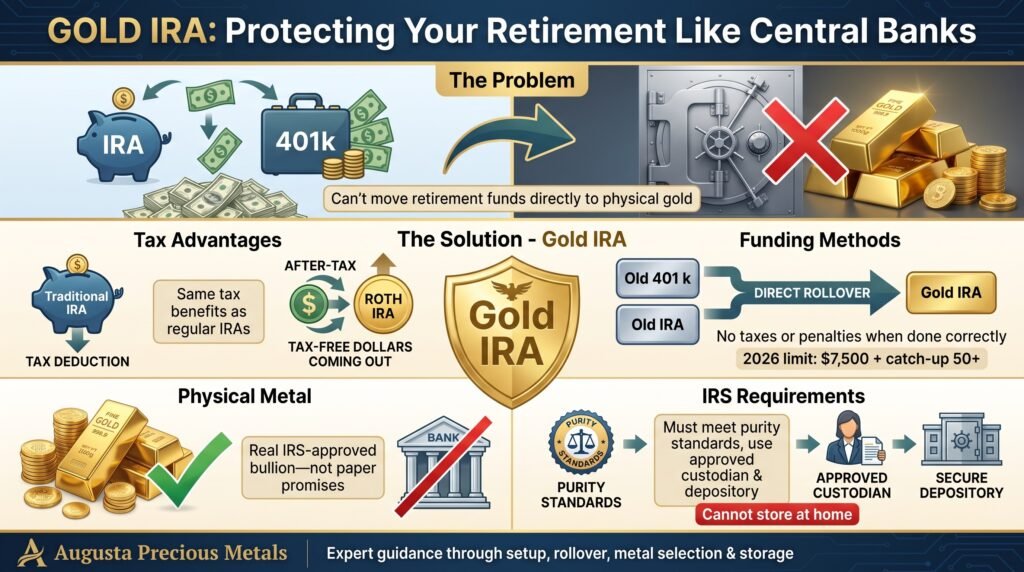
    The challenge for many people is that most of their wealth sits in retirement accounts, such as IRAs and 401(k)s, where it can’t simply be moved into a safe full of bullion. That is where a gold IRA comes in.

    A gold IRA is a self-directed individual retirement account that holds physical precious metals instead of, or in addition to, traditional paper assets. It offers several features worth understanding:

    Tax advantages. A gold IRA follows the same tax framework as other IRAs. In a traditional gold IRA, contributions may be tax-deductible, and growth is tax-deferred until withdrawal.

    You gain exposure to physical metal without the immediate tax hit you could face if you simply sold other investments to buy gold.

    Rollovers and transfers. Many savers fund a gold IRA by rolling over or transferring funds from an existing IRA or an old 401(k), such as one from a former employer. When done correctly as a direct rollover, this generally doesn’t trigger taxes or penalties.

    For direct contributions, ordinary annual IRA limits apply (for 2026, $7,500, with an additional catch-up contribution for those 50 and older).

    Physical metal, outside the banking system. Unlike gold-focused funds or mining stocks, a gold IRA holds actual IRS-approved bullion and coins. There is no counterparty promising to deliver value, which is the same quality that appeals to central banks.

    IRS rules to know. The metals must meet IRS purity standards, and they must be held by an approved custodian and stored in an approved depository. You can’t keep IRA metals at home. A qualified provider helps you navigate these requirements so mistakes don’t trigger penalties.

    How Does Augusta Work?

    Where Augusta Precious Metals Fits

    Setting up a gold IRA involves several moving parts: choosing a self-directed IRA custodian, completing the rollover paperwork, selecting eligible metals, and arranging secure storage. That is where a specialist can help.

    Augusta Precious Metals is a precious metals firm that helps individuals open and fund tax-advantaged gold and silver IRAs and walks them through each of those steps.

    Their approach emphasizes education, so that you understand what you’re buying, what it costs, and how it fits into your overall retirement picture before you commit. Augusta is one of the leading gold investing companies for trust, customer empowerment, and prices.

    A Reliable, Accredited Business
    A Reliable, Accredited Business

    If you already hold some gold and silver and want a second opinion on whether you’re positioned properly, Augusta can review your situation.

    If you hold none and your savings are concentrated in dollar-denominated assets, a conversation about a gold IRA is a reasonable first step toward building a plan that covers both the present and whatever comes after a possible reset or revaluation.

    Augusta Precious Metals Testimonials
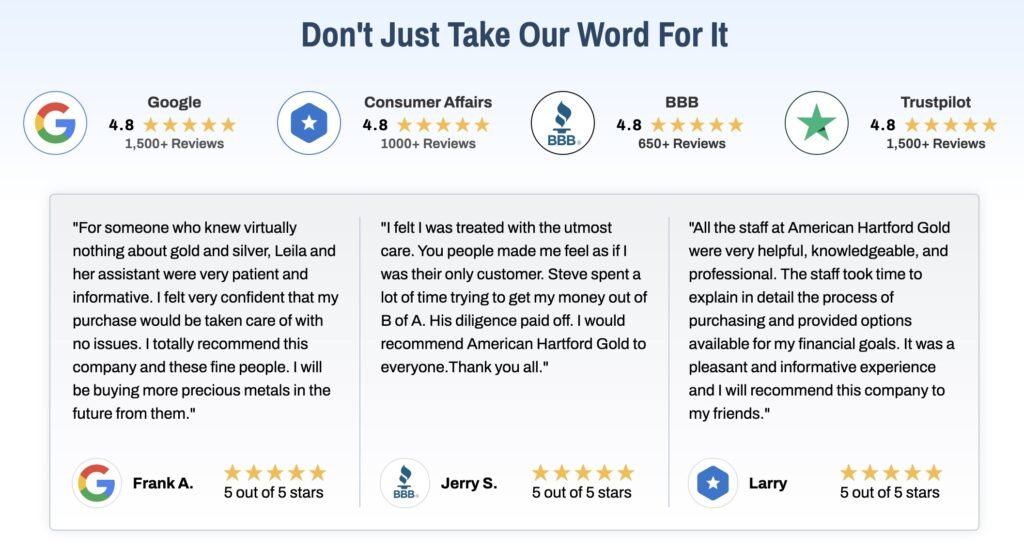
    Augusta Precious Metals Testimonials
    Augusta Precious Metals Testimonials

    Click the banner below to receive a free gold IRA integrity checklist from their official site. Fill out their short contact form to get started.

    Frequently Asked Questions

    These are the questions investors ask most often when a Gold IRA company dangles a free silver bonus in front of them. Short, direct answers tend to be the most useful here, since the details matter more than the marketing.

    Keep these answers handy the next time a dealer brings up a bonus offer, since the same core facts apply regardless of which company is making the pitch.

    What should I ask before accepting a free silver promotion?

    Ask for the raw premium percentage on every coin involved, the buy-back price on all items including the free silver, written confirmation of IRA eligibility from your custodian, and a complete list of fees and when any waivers expire.

    If a dealer hesitates or refuses to answer any of these directly, treat that as your answer.

    Does the Texas Bullion Depository make numismatic coins IRA-eligible?

    No. Storing coins at the Texas Bullion Depository does not change a coin’s eligibility status under IRC 408(m), and it doesn’t offset an inflated dealer premium either. Eligibility is determined by the coin itself, not by where it’s physically stored.

    What penalty do I face if my IRA holds an ineligible coin?

    An ineligible coin triggers a deemed distribution taxed at ordinary federal income rates, plus a 10% early withdrawal penalty under IRC 72(t) if you’re under age 59.5. Texas residents avoid state income tax on that distribution under the Texas Constitution, but the federal tax and penalty still apply in full.

    How can I verify a gold dealer’s pricing is fair?

    Get written quotes from at least two other dealers for the identical coins and quantities on the same day, then compare the premium percentages directly.

    A quote landing more than five points above the median is a clear signal that the bundle is priced to cover a bonus rather than to reflect fair market value.

    Click the banner below and fill out their short contact form on their site to get started.
    Gold and Silver IRA Info Kit
    Gold and Silver IRA Info Kit
  • Gold IRA Free Silver Promotions: What’s the Real Catch?

    Gold IRA Free Silver Promotions: What’s the Real Catch?

    What's the catch with Gold IRA Company free silver promotions?
    What’s the catch with Gold IRA Company free silver promotions?

    Key Takeaways

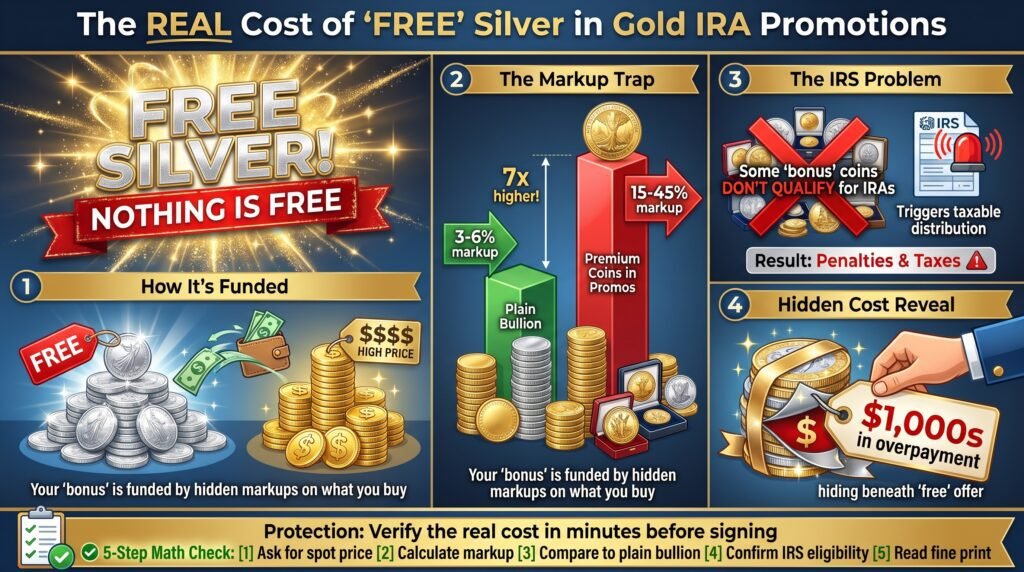
    Free silver promotions are funded by markups on premium coins, not given away out of generosity.

    Premium coins can carry 15-45% markups over spot price, far above the 3-6% typical on plain bullion.

    Some coins offered in “bonus” bundles don’t even qualify for IRA accounts under IRS rules, which can trigger a taxable distribution.

    Resources like this breakdown on gold IRA fees and promotions can help you spot the real cost behind a “free” offer before you sign anything.

    A simple five-step math check can tell you in minutes whether a free silver deal is a good one or a trap.

    That shiny pitch about “free silver” when you open a Gold IRA almost always comes with strings attached that cost you more than the silver is worth.

    Dealers know that the word “free” grabs attention, and they build entire marketing campaigns around it. But the silver isn’t falling out of the sky. It’s paid for somewhere else in the transaction, usually buried inside the price of the gold or silver coins you’re buying.

    Understanding exactly how that works is the difference between getting a fair deal and quietly overpaying by thousands of dollars.

    Table of Contents

    1. The “Free” Silver Trick Dealers Don’t Explain
    2. How Some Dealers Fund Your “Free” Bonus
    3. Could Your Free Silver Bonus Tank Your IRA?
    4. Regulators Are Already Watching These Offers
    5. 5 Sales Pitches That Should Raise a Red Flag
    6. What Texas Investors Need to Know
    7. The Case for a Reputable Gold IRA Company
    8. Frequently Asked Questions

    The “Free” Silver Trick Dealers Don’t Explain

    Precious metals dealers didn’t invent the “buy this, get that free” model, but they’ve perfected it for retirement accounts. The pitch sounds generous: roll over your 401(k) or IRA, and the company throws in a set amount of silver at no extra charge. It feels like a bonus. In reality, it’s a pricing lever.

    Free Silver Is a Marketing Tool, Not a Gift

    Every ounce of “free” silver a dealer hands you gets paid for somewhere. Dealers don’t operate charities; they operate businesses with margins built into every coin they sell.

    When a company offers free silver, that cost gets absorbed into the price of the gold or silver you’re purchasing, usually through a higher markup on premium or semi-numismatic coins rather than plain bullion.

    Two Versions: IRA Bonus vs. Home Delivery Lure

    These offers typically show up in two forms. The first is an IRA bonus, where opening or funding a retirement account with precious metals unlocks a silver bonus scaled to your rollover size.

    The second is a home delivery lure, where buying physical silver or gold for personal storage comes with “bonus” coins shipped to your door. Both work the same way under the hood: the free item is funded by markup on the paid item.

    Why the Silver Itself Isn’t the Problem

    It’s worth being clear that silver bullion itself isn’t the issue here. American Silver Eagles, for example, are legitimate, IRA-eligible coins under federal law.

    The problem isn’t the metal; it’s the pricing structure wrapped around it, and whether the coins used to fund your “free” bonus are overpriced, ineligible for your IRA, or both.

    How Some Dealers Fund Your “Free” Bonus

    To understand the real cost of a free silver offer, you need to know how dealer premiums work across different coin categories. The gap between what’s fair and what’s inflated is wider than most buyers realize.

    Bullion Coins Carry a 3-6% Premium Over Spot

    Standard bullion American Gold Eagles typically sell for 3% to 6% above the spot price of gold. That premium covers minting, distribution, and dealer margin, and it’s considered the baseline cost of owning physical gold in a straightforward, liquid form.

    Premium Coins Carry a 15-45% Markup

    Premium coins are a different animal entirely. Proof Eagles, semi-numismatic issues, and graded coins can carry markups of 15% to 45% over spot.

    That’s the category dealers most often use to fund free silver bonuses, because the extra margin gives them room to “give away” metal while still turning a profit.

    Court records from state enforcement actions have shown some premium coin lines marked up over 100% above spot.

    When a dealer pushes you toward a premium or graded coin as part of a bonus bundle, that premium gap is exactly where your “free” silver gets paid for.

    A Real Math Example: $3,000 in Silver for $8,000 in Hidden Fees

    Here’s a documented example of how this plays out. One tested offer promised a $3,000 silver bonus, but the premium coins used to fund that rollover carried an extra $8,000 in markup compared to plain bullion pricing.

    In other words, the buyer paid $8,000 more than necessary to receive $3,000 worth of “free” silver.

    • Advertised bonus: $3,000 in silver
    • Extra premium paid to fund it: $8,000
    • Net cost to the buyer: $5,000 more than a plain bullion purchase

    That’s not a bonus. That’s a $5,000 loss dressed up as a gift.

    Dealer Spreads Can Range From 20% to Over 300%

    On a $50,000 rollover, even a five-point drop in pricing efficiency wipes out $2,500 worth of metal. A twenty-point drop erases $10,000.

    Spreads between bullion and premium-coin pricing can run anywhere from 20% to well over 300%, depending on the product line and how aggressively a dealer is pushing numismatic or graded coins. The wider that spread, the more expensive your “free” silver really is.

    Could Your Free Silver Bonus Tank Your IRA?

    Beyond overpaying, there’s a second risk that’s even more serious: some coins used in bonus promotions don’t legally qualify for IRA ownership at all.

    IRS Rule 408(m): The Collectibles Ban

    Under Internal Revenue Code Section 408(m)(1), if your IRA acquires a collectible, the IRS treats that purchase as a distribution equal to the collectible’s full cost. That’s not a penalty on future growth; that’s an immediate taxable event the day the coin enters your account.

    Which Coins Actually Qualify for an IRA

    Section 408(m)(3) carves out specific exceptions. Gold coins defined in 31 USC 5112(a)(7)-(10), silver coins under 5112(e), platinum coins under 5112(k), certain state-issued coins, and bullion meeting required fineness levels all qualify.

    Required purity sits at 99.5% for gold, 99.9% for silver, and 99.95% for platinum and palladium.

    What Happens the Day an Ineligible Coin Enters Your Account

    Semi-numismatic issues, graded slabs, and pre-1933 gold priced for its collectible grade fall outside that carve-out.

    If one of those coins lands in your IRA, custodians are required to reject it at the depository door under IRC 408(m), and if it somehow gets through, it’s treated as a deemed distribution the moment it enters the account. A free silver bonus doesn’t fix that problem. It can’t.

    Why American Silver Eagles Pass the Test

    American Silver Eagles are explicitly IRA-eligible under 31 USC 5112(e), making them one of the safer bonus options if a dealer offers them.

    The lesson here isn’t that free silver is inherently risky; it’s that you need written confirmation of eligibility on every single coin in a bonus bundle before you agree to anything.

    Regulators Are Already Watching These Offers

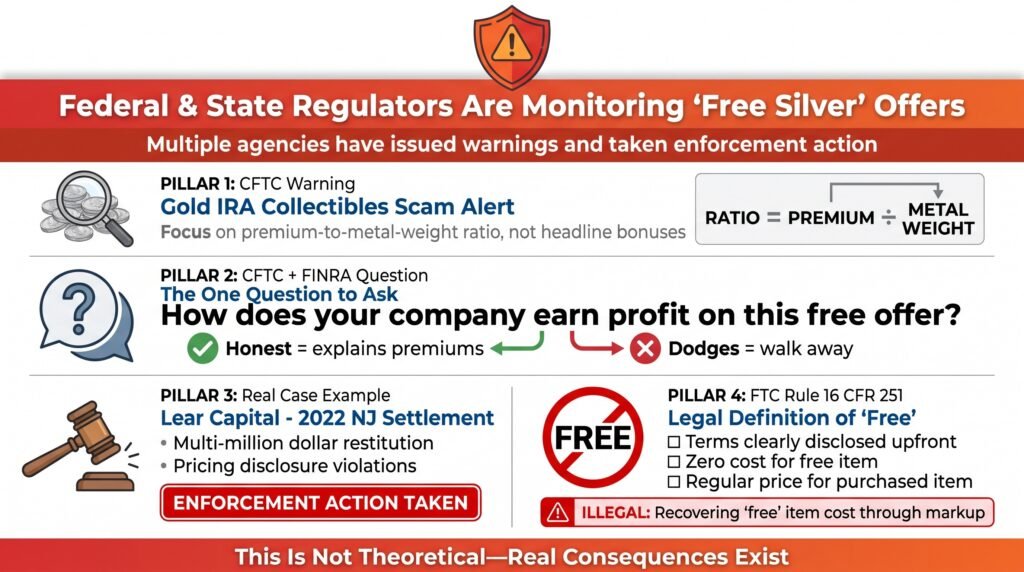
    Free silver promotions haven’t escaped the attention of federal and state regulators. Several agencies have published specific guidance aimed at helping investors spot inflated pricing dressed up as a bonus, and at least one major dealer has already faced consequences for how it handled these offers.

    What the CFTC’s “Gold IRA Collectibles Scam” Warning Says

    The Commodity Futures Trading Commission runs an investor education series called “Learn and Protect,” which includes a piece titled The Gold IRA Collectibles Scam alongside another called Gold and Silver Frauds Do the Math.

    The core message in both is simple: the ratio between a coin’s premium and its actual metal weight is the number that matters most, not the headline bonus a dealer advertises.

    The Question CFTC and FINRA Say You Must Ask

    In joint guidance, the CFTC and FINRA advise investors to directly ask a dealer how the company earns its profit, “especially if it appears to be giving away precious metal or offering other big freebies.”

    That one question tends to cut through the marketing fast, because a dealer offering a straight answer will point to coin premiums, while one dodging the question is worth walking away from.

    Lear Capital’s 2022 New Jersey Settlement

    This isn’t theoretical. In 2022, the New Jersey Bureau of Securities entered a consent order against Lear Capital that included multi-million-dollar restitution to New Jersey investors tied to precious-metals pricing disclosures.

    It’s a clear example of how pricing practices around bonus and premium coin sales have drawn real regulatory scrutiny, not just investor complaints.

    The FTC’s Rule on “Free” Offers

    The Federal Trade Commission has its own rule governing how the word “free” can legally be used in advertising.

    Under 16 CFR Part 251, terms for a free item must be “set forth clearly and conspicuously at the outset,” and consumers are entitled to pay nothing for the free item and no more than the regular price for whatever they’re buying alongside it.

    Critically, the FTC guidance states that a dealer should not recover the cost of a free item by marking up the item being purchased, which is exactly the practice regulators have flagged in several precious-metals cases.

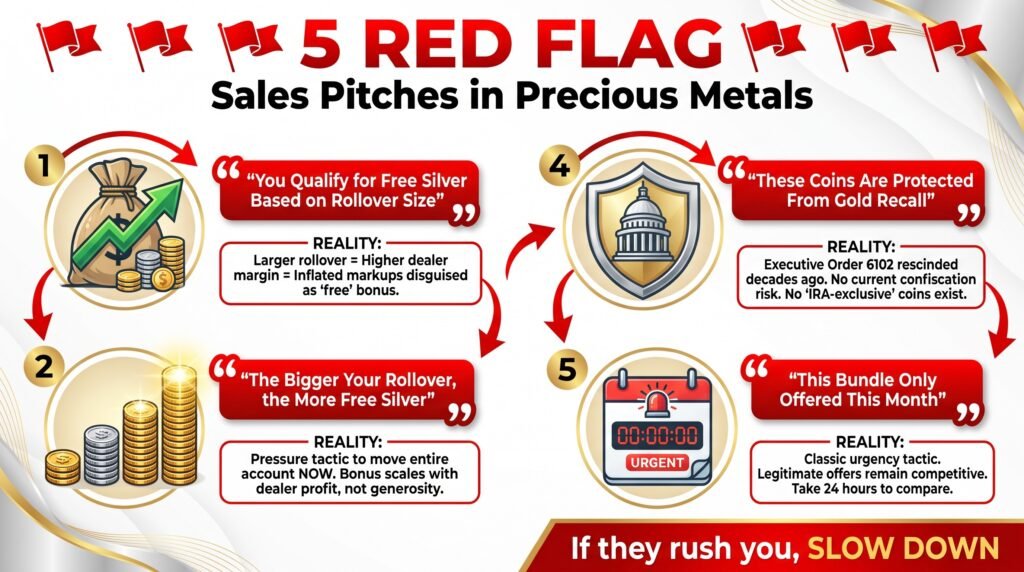
    5 Sales Pitches That Should Raise a Red Flag

    Dealers rely on a handful of recurring phrases to make free silver offers sound more generous and more urgent than they really are. Recognizing these patterns before you’re on the phone with a salesperson puts you in a much stronger position.

    1. “You Qualify for Free Silver Based on Rollover Size”

    This framing makes the bonus sound like a reward for how much you’re moving over, when in reality it just means the dealer has more margin to work with on a larger order.

    The bigger your rollover, the more premium they can bake into the coins they sell you, and the more “free” silver they can afford to hand back as a percentage of that inflated markup.

    2. “The Bigger Your Rollover, the Freer Silver”

    This is the scale framing taken a step further, often used to pressure buyers into moving their entire account right now instead of taking a measured approach.

    The bonus scales because dealer margin scales, not because the company is being more generous with larger relationships. If anything, a bigger rollover deserves more scrutiny, not less, since more of your retirement money is riding on the pricing being fair.

    3. “These Coins Hold Value Better Than Bullion”

    This justification gets used to explain why premium or semi-numismatic coins are included in the bonus bundle instead of plain bullion.

    It sounds reasonable on the surface, but it conveniently ignores that premium coins come with resale markets that are far thinner than standard bullion, and that the extra price you paid upfront doesn’t always translate into extra value when you go to sell.

    Plain bullion remains the cheapest and most liquid way to hold gold or silver in an IRA, and there’s no reliable data showing that premium coins consistently outperform bullion over time within a retirement account.

    4. “These Coins Are Protected From a Gold Recall”

    Some dealers push certain coins, often older or pre-1933 issues, as being somehow protected from a future government gold confiscation. This claim traces back to Executive Order 6102, which was rescinded decades ago.

    There is no current US Treasury policy addressing a modern seizure risk, and no legitimate reason to pay a steep premium based on a confiscation scenario that no longer applies.

    It’s worth noting that the US Mint does not issue any coins specifically designated for IRA use, so any coin marketed as an “IRA-exclusive” or “IRA-safe” edition should be treated with skepticism.

    5. “This Bundle Is Only Offered This Month”

    Urgency is one of the oldest sales tactics in the book, and precious-metals dealers use it the same way as everyone else.

    Framing a bonus as an exclusive, limited-time release pressures buyers into skipping the comparison shopping and math-checking steps that actually protect them. A legitimate offer will still be reasonably competitive next week, and if a dealer is rushing you, that’s reason enough to slow down.

    Rule of thumb: if a dealer won’t give you 24 hours to compare quotes elsewhere, the “limited-time” bonus probably isn’t limited at all; it’s just pressure.

    What Texas Investors Need to Know

    Texas has its own quirks when it comes to precious-metals IRAs, some favorable and some that don’t actually change anything about the underlying federal rules.

    Understanding which protections are real and which are marketing points specific to the state helps Texas-based investors avoid confusion when a dealer brings up in-state storage or tax advantages.

    The bottom line is that while Texas offers some unique infrastructure for bullion storage, it doesn’t override or soften any of the IRS rules governing what can go into your IRA.

    Texas Has No State Income Tax, But the IRS Still Does

    Article 8, Section 24 of the Texas Constitution bans a state personal income tax, which means Texas residents don’t pay state tax on a deemed IRA distribution.

    That sounds like good news, and it is, but it doesn’t eliminate federal tax exposure. If an ineligible coin triggers a deemed distribution under IRC 408(m), that distribution is still taxed federally at ordinary income rates regardless of which state you live in.

    IRC 408(m) applies to Texas residents exactly the same way it applies to everyone else in the country. There’s no state-level exemption or loophole that changes the eligibility rules for what counts as an acceptable IRA coin.

    The 10% Early Withdrawal Penalty Still Applies

    On top of the federal income tax owed on a deemed distribution, account owners under age 59.5 face an additional 10% early withdrawal penalty under IRC Section 72(t).

    That penalty applies nationwide, including in Texas, and it stacks directly on top of whatever ordinary income tax is owed on the distributed amount.

    The Texas Bullion Depository Won’t Fix a Bad Coin Choice

    Texas is home to the Texas Bullion Depository in Leander, which stores IRA-eligible bullion through Lone Star Tangible Assets, a company that received IRS non-bank trustee approval in 2023.

    It’s a legitimate and well-regarded storage option. But storing a coin at the Texas Bullion Depository does not turn a numismatic or semi-numismatic coin into an eligible one, and it does nothing to offset an inflated dealer premium. Eligibility is determined by the coin itself under IRC 408(m)(3), not by where it’s physically stored.

    Where to File a Complaint in Texas

    Texas residents who run into a precious-metals dealer registered as a securities-related entity can file complaints with the Texas State Securities Board, which handles investor complaints and publishes its own investor alerts on precious-metals fraud.

    For deceptive sales practices more broadly, the Consumer Protection Division of the Texas Attorney General handles complaints under the Texas Deceptive Trade Practices Act.

    To learn more: 8 Steps to Check If a Free Silver Offer Is Really Worth It, When You Should Say No to a Free Silver Deal, and more, read the detailed article here.

    Positioning Yourself- The Case for a Gold IRA
    Positioning Yourself- The Case for a Gold IRA

    The Case for a Reputable Gold IRA Company

    If central banks are hedging, individual savers can consider doing the same. The challenge for many people is that most of their wealth sits in retirement accounts, such as IRAs and 401(k)s, where it can’t simply be moved into a safe full of bullion. That is where a gold IRA comes in.

    A gold IRA is a self-directed individual retirement account that holds physical precious metals instead of, or in addition to, traditional paper assets. It offers several features worth understanding:

    Tax advantages. A gold IRA follows the same tax framework as other IRAs. In a traditional gold IRA, contributions may be tax-deductible, and growth is tax-deferred until withdrawal.

    You gain exposure to physical metal without the immediate tax hit you could face if you simply sold other investments to buy gold.

    Rollovers and transfers. Many savers fund a gold IRA by rolling over or transferring funds from an existing IRA or an old 401(k), such as one from a former employer. When done correctly as a direct rollover, this generally doesn’t trigger taxes or penalties.

    For direct contributions, ordinary annual IRA limits apply (for 2026, $7,500, with an additional catch-up contribution for those 50 and older).

    Physical metal, outside the banking system. Unlike gold-focused funds or mining stocks, a gold IRA holds actual IRS-approved bullion and coins. There is no counterparty promising to deliver value, which is the same quality that appeals to central banks.

    IRS rules to know. The metals must meet IRS purity standards, and they must be held by an approved custodian and stored in an approved depository. You can’t keep IRA metals at home. A qualified provider helps you navigate these requirements so mistakes don’t trigger penalties.

    How Does Augusta Work?

    Where Augusta Precious Metals Fits

    Setting up a gold IRA involves several moving parts: choosing a self-directed IRA custodian, completing the rollover paperwork, selecting eligible metals, and arranging secure storage. That is where a specialist can help.

    Augusta Precious Metals is a precious metals firm that helps individuals open and fund tax-advantaged gold and silver IRAs and walks them through each of those steps.

    Their approach emphasizes education, so that you understand what you’re buying, what it costs, and how it fits into your overall retirement picture before you commit. Augusta is one of the leading gold investing companies for trust, customer empowerment, and prices.

    A Reliable, Accredited Business
    A Reliable, Accredited Business

    If you already hold some gold and silver and want a second opinion on whether you’re positioned properly, Augusta can review your situation.

    If you hold none and your savings are concentrated in dollar-denominated assets, a conversation about a gold IRA is a reasonable first step toward building a plan that covers both the present and whatever comes after a possible reset or revaluation.

    Click the banner below to receive a free gold IRA integrity checklist from their official site. Fill out their short contact form to get started.

    Frequently Asked Questions

    These are the questions investors ask most often when a Gold IRA company dangles a free silver bonus in front of them. Short, direct answers tend to be the most useful here, since the details matter more than the marketing.

    Keep these answers handy the next time a dealer brings up a bonus offer, since the same core facts apply regardless of which company is making the pitch.

    Is free silver from a Gold IRA company actually free?

    No. The silver is paid for through higher markups on the gold or silver coins you’re purchasing, usually premium or semi-numismatic coins rather than plain bullion.

    The CFTC and FINRA specifically advise investors to ask how a dealer affords to give away precious metal, since the answer always traces back to pricing elsewhere in the deal.

    Think of it less as a gift and more as a repackaged discount, one where you’re the one funding the discount through an inflated purchase price.

    How do dealers afford to give away silver?

    Dealers fund free silver bonuses through the premium built into other coins in your order, often 15% to 45% over spot for premium or graded coins, compared to just 3% to 6% for standard bullion.

    That extra margin covers the cost of the bonus while still leaving the dealer a profit.

    In one documented case, a $3,000 silver bonus was funded by an $8,000 markup on the coins purchased to fund it, meaning the buyer paid $8,000 extra to receive $3,000 worth of “free” metal.

    Can free silver coins disqualify my IRA?

    Yes, if the coins used in the bonus bundle don’t meet IRS eligibility rules under IRC 408(m)(3). Semi-numismatic issues, graded slabs, and collectible-grade coins fall outside the eligible categories, and if one enters your IRA, it triggers a deemed distribution on the day it’s acquired.

    What premium should I expect to pay on IRA-eligible gold coins?

    Standard bullion gold coins, like American Gold Eagles, typically carry premiums of 3% to 6% over spot price. Anything significantly higher than that range deserves a direct explanation from the dealer before you proceed.

    Premium or collectible coins can run 15% to 45% over spot, and in some documented cases, markups have exceeded 100%.

    Are American Silver Eagles safe to hold in an IRA?

    Yes. American Silver Eagles are explicitly IRA-eligible under 31 USC 5112(e), making them one of the more straightforward bonus options if a dealer includes them as part of a promotion.

    Click the banner below and fill out their short contact form on their site to get started.
    Gold and Silver IRA Info Kit
    Gold and Silver IRA Info Kit
  • How Silver Performs and Why a Small Position Can Hedge Inflation in Your Retirement (2026)

    How Silver Performs and Why a Small Position Can Hedge Inflation in Your Retirement (2026)

    Quick Summary

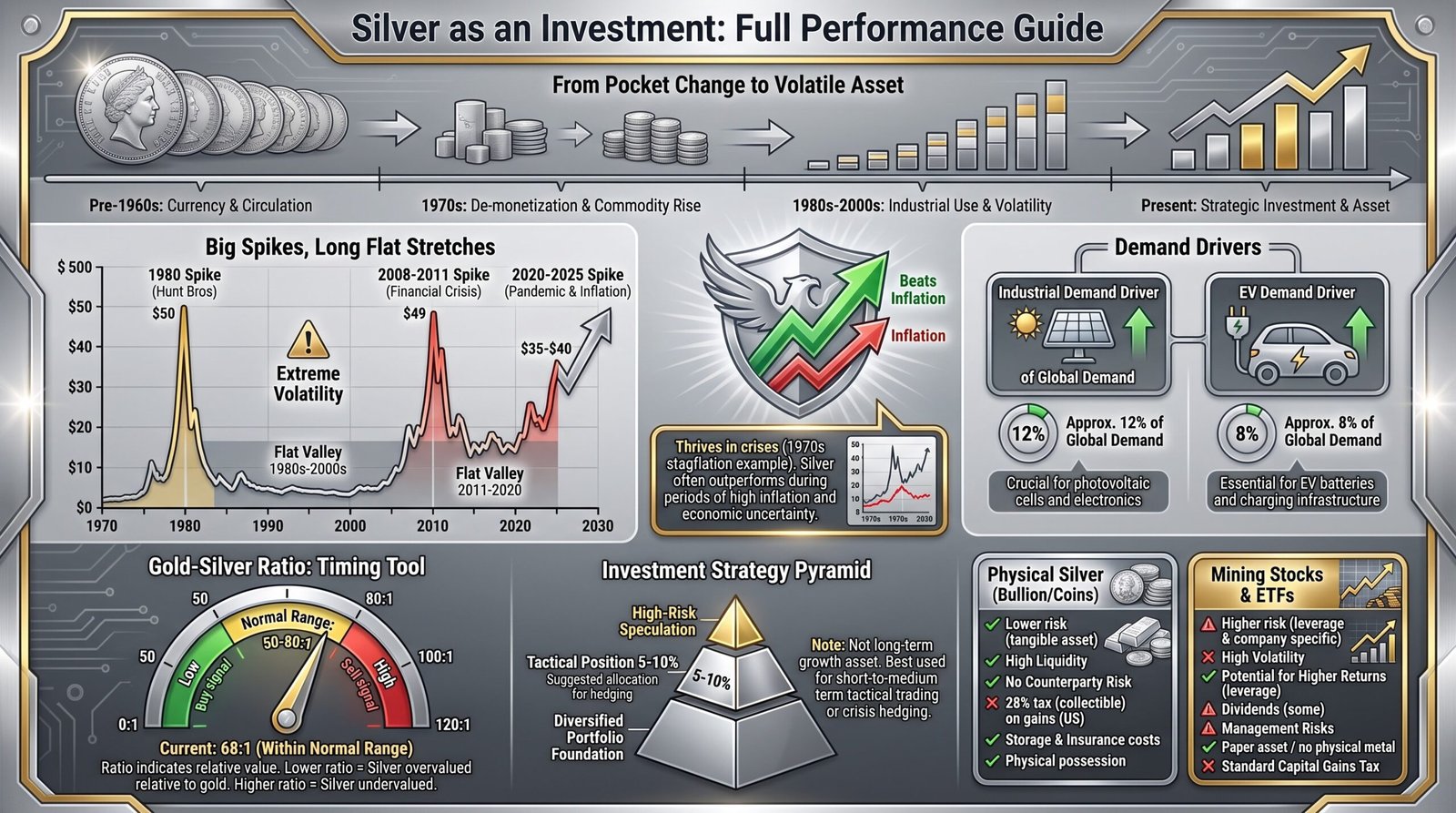
    Silver has gone from pocket change to a volatile investment, with big spikes (1980, 2008-2011, 2020-2025) and long flat stretches.

    It has often beaten inflation and done well in crises like 1970s stagflation, and demand is now driven heavily by industrial uses like solar panels and EVs.

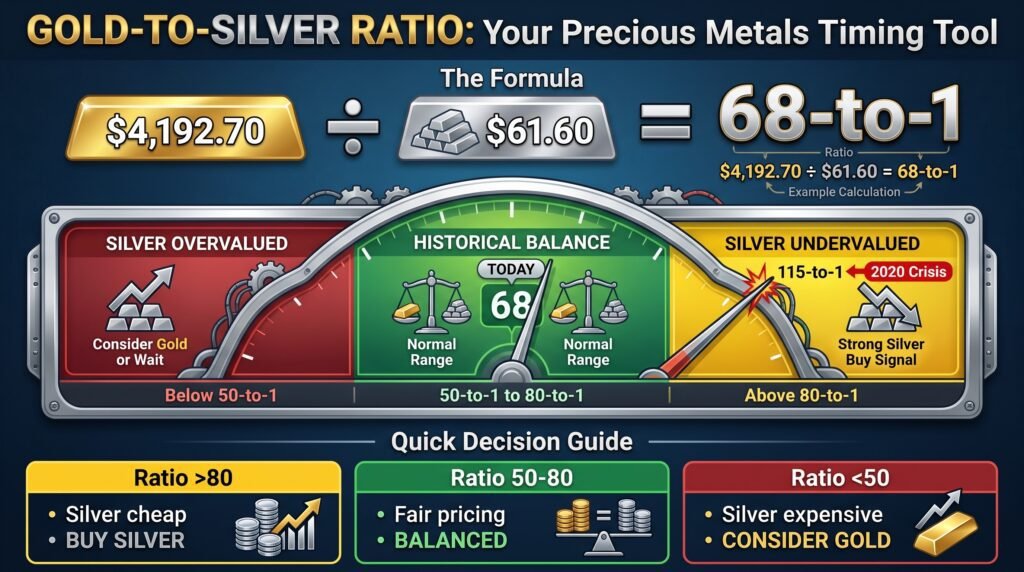
    The gold-to-silver ratio (normally 50-80:1, currently about 68:1) can help with timing.

    Silver is closer to speculation than a long-term growth asset, so it works best as a small, tactical position for diversification. Mining stocks are riskier than physical silver, and physical silver is taxed as a collectible (up to 28%).

    If you’re exploring how precious metals fit into your retirement strategy, Augusta Precious Metals has spent over a decade helping people navigate exactly these kinds of decisions, particularly when it comes to setting up silver IRAs the right way.

    Visit Augusta’s official site and fill out their short contact form by clicking the button below.

    Table of Contents

    1. Quick Summary
    2. Silver’s Wild Price History Tells a Story
    3. Does Silver Actually Protect You From Inflation?
    4. The Gold-to-Silver Ratio: Your Timing Tool
    5. Why Industrial Demand Is Reshaping Silver’s Future
    6. Is Silver a Long-Term Investment or Speculation?
    7. How Silver Performed During Past Financial Crises
    8. Silver’s Journey From Pocket Change to Portfolio Asset
    9. Gold vs. Silver: Picking Your Precious Metal Mix
    10. Frequently Asked Questions

    Silver’s Wild Price History Tells a Story

    Silver hasn’t always been the volatile investment vehicle it is today. For most of American history, it was quite literally pocket change, used in everyday transactions while gold sat in vaults reserved for the wealthy.

    That changed dramatically once silver was demonetized, and its price history since then reads like a rollercoaster.

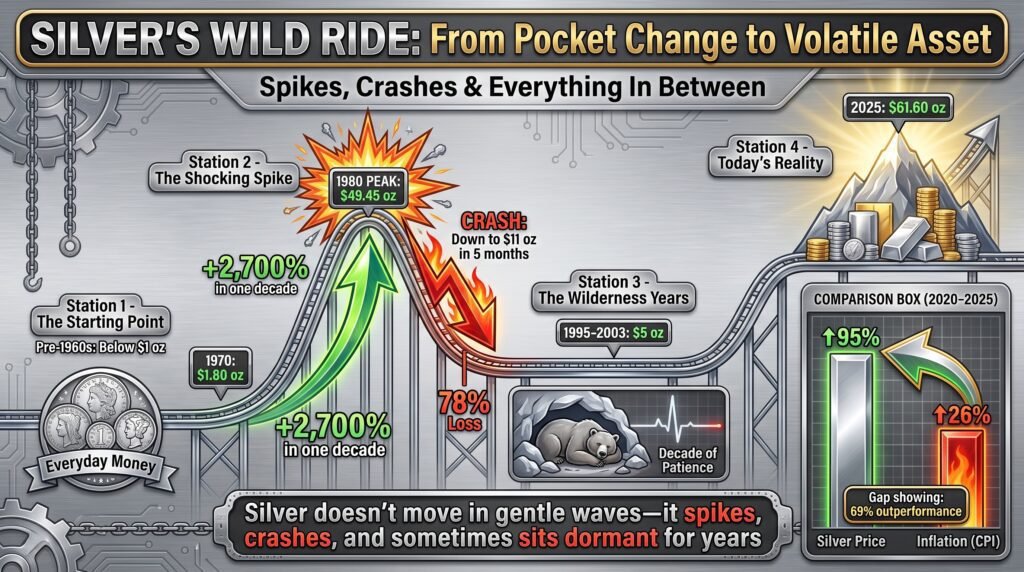
    Understanding this history matters because it tells you what to expect. Silver doesn’t move in gentle, predictable waves. It spikes, crashes, and sometimes just sits there doing nothing for a decade at a time.

    From Under $1 to $61.60: Silver’s Price Journey

    Until the 1960s, silver stayed below $1 per ounce. By the start of 1970, it had climbed to $1.80. Fast forward to today, and silver trades at $61.60 per ounce, a staggering climb that took decades of fits and starts to reach.

    The 1/3 Rule: Splitting Between Gold, Silver, and Platinum

    Another framework some investors use splits precious-metals holdings into thirds: one-third in gold, with the remainder split between silver and platinum. This approach spreads your precious metals exposure across multiple metals rather than concentrating entirely in one.

    The 1980 Spike and Crash That Shocked Investors

    Nothing illustrates silver’s volatility quite like 1980. Silver peaked at $49.45 per ounce that year, representing a 2,700% increase over the decade. Then it crashed to less than $11 within just five months.

    Investors who bought at the top learned a hard lesson about chasing silver during a price spike, a mistake that still trips people up today.

    From there, silver spent years in the wilderness. Prices languished around $5 per ounce from 1995 through the end of 2003, testing the patience of anyone holding the metal during that stretch.

    Why 2020-2025 Became Silver’s Strongest Run

    Silver’s average price rose roughly 95% from 2020 to 2025, while the Consumer Price Index climbed only about 26% during that same window. That gap matters.

    It shows silver didn’t just keep pace with inflation; it significantly outran it, while inflation ate away at the dollar’s buying power at a much slower rate

    Does Silver Actually Protect You From Inflation?

    This is the question every retiree wants answered before committing retirement savings to a metal that doesn’t pay interest or dividends. Silver’s track record suggests it can work as an inflation hedge, but the timing and context matter enormously.

    Silver’s appeal as a hedge comes down to one simple idea: it tends to hold or increase its purchasing power when paper currency loses value.

    Comparing Silver Gains to the Consumer Price Index

    Between 2020 and 2025, silver’s roughly 95% price increase dwarfed the CPI’s 26% rise. For retirees worried about their savings losing value to inflation, that’s the kind of gap that gets attention. Silver didn’t just protect purchasing power during this stretch; it expanded it.

    What Happened to Silver During 1970s Stagflation

    The 1970s offer perhaps the clearest example of silver doing its job as an inflation hedge. During the stagflation of that decade, when inflation peaked above 13%, silver’s average annualized growth rate exceeded 30%. That’s not a coincidence.

    Stagflation, which combines high inflation with stagnant economic growth, tends to be exactly the environment where precious metals shine while traditional stocks and bonds struggle.

    The Gold-to-Silver Ratio- Your Timing Tool
    The Gold-to-Silver Ratio – Your Timing Tool

    The Gold-to-Silver Ratio: Your Timing Tool

    If you’re trying to figure out whether now is a good time to buy silver, the gold-to-silver ratio gives you a concrete number to work with instead of guessing based on headlines.

    This ratio simply divides the price of gold by the price of silver, telling you how many ounces of silver it takes to buy one ounce of gold. It’s one of the oldest tools precious metals investors use to time their purchases.

    What a Normal Ratio Looks Like (50-to-1 to 80-to-1)

    Historically, the gold-to-silver ratio sits somewhere between 50-to-1 and 80-to-1. When the ratio falls within this range, it suggests both metals are priced roughly in line with their historical relationship to each other.

    As of October 2026, with gold currently priced at $4,192.70 per ounce and silver at $61.60, the current ratio sits right around 68-to-1, comfortably within that normal historical band.

    How the Ratio Hit 115-to-1 in 2020

    Sometimes the ratio swings way outside its normal range, and 2020 gave us a perfect example. The gold-to-silver ratio grew to nearly 115-to-1 in early 2020, meaning silver was historically cheap compared to gold.

    This kind of extreme reading tends to happen during moments of acute market stress, when investors flock to gold as the ultimate safe haven while silver, with its industrial demand component, gets temporarily left behind.

    For investors watching the ratio, that 115-to-1 reading in 2020 would have signaled an unusually attractive entry point into silver relative to gold.

    Using the Ratio to Decide When to Buy More Silver

    The basic strategy here isn’t complicated. When the ratio runs high, above 80-to-1, it signals silver is relatively inexpensive and may be worth adding more of to your holdings.

    When the ratio runs low, below 50-to-1, silver is relatively expensive, and you might lean toward gold instead or simply hold off on new silver purchases.

    A ratio above 80 historically suggests silver is undervalued relative to gold. A ratio below 50 suggests silver is overvalued. Anywhere in between, the two metals are roughly in historical balance.

    This isn’t a crystal ball, but it’s a far better decision-making tool than simply buying whenever silver makes headlines.

    Tax-Advantaged Silver IRAs

    If you’re serious about adding silver to your retirement portfolio in a tax-advantaged way, a silver IRA is the vehicle built specifically for that purpose.

    But the IRS has strict rules about what qualifies, and getting this wrong can trigger unexpected taxes and penalties.

    A silver IRA works similarly to a traditional retirement account, except instead of holding stocks and bonds, it holds physical silver that meets specific IRS purity requirements. Setting one up correctly requires working with the right custodian and understanding exactly what silver products qualify.

    This is an area where having an experienced partner matters enormously.

    Augusta Precious Metals and Birch Gold Group have built relationships with mints around the world specifically to help customers purchase IRA-eligible gold and silver coins directly from their producers, which helps ensure authenticity and compliance with IRS rules from day one.

    Augusta Precious Metals Ratings and Testimonials

    Augusta Precious Metals - A Reliable, Accredited Business
    Augusta Precious Metals – A Reliable, Accredited Business
    Augusta Precious Metals Testimonials
    Augusta Precious Metals Testimonials

    Augusta Precious Metals is best for high-income earners, best pricing, & lifetime customer support.

    Receive a free gold information kit by filling out their short contact form when you click one or both of the banners below.

    gold_silver_kit

    Birch Gold Group is known for low investment minimums, low fees, and established trust.

    The company holds an A+ rating from BBB, a Triple A rating from Business Consumer Alliance, as well as high marks from Trust Link, Trustpilot, and Google Business.

    Birch Gold Group Ratings
    Exclusive Birch Gold Group Interviews
    Why Industrial Demand Is Reshaping Silvers Future
    Why Industrial Demand Is Reshaping Silver’s Future

    Why Industrial Demand Is Reshaping Silver’s Future

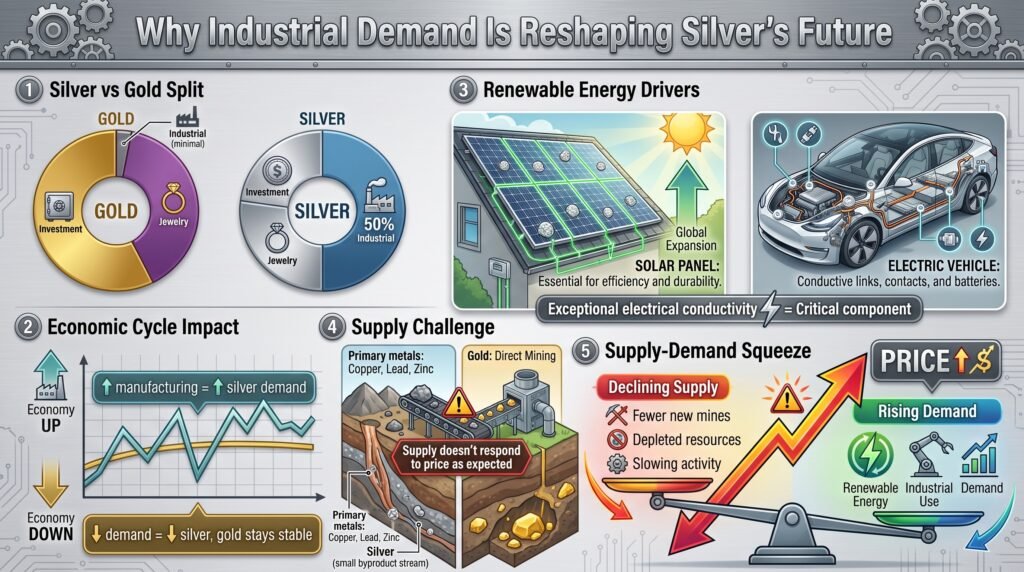
    Here’s what separates silver from gold in a fundamental way: roughly half of all silver demand comes from industrial applications, not investment or jewelry. Gold sits in vaults and gets worn as jewelry.

    Silver gets used, consumed, and often never recovered, which creates a completely different demand dynamic.

    This industrial component is exactly why silver’s price can behave unpredictably compared to gold. When the economy heats up and manufacturing increases, industrial silver demand climbs right alongside it.

    When the economy slows, that same demand can dry up fast, pulling silver prices down even while gold holds steady as a safe haven.

    Right now, the renewable energy movement has become one of the biggest tailwinds silver has ever seen.

    Solar panels and electric vehicle components both rely heavily on silver, and as the world continues shifting toward renewable energy, that demand isn’t going away anytime soon.

    Solar Panels and Electric Vehicles Driving Demand

    Every solar panel manufactured today contains silver, used for its exceptional electrical conductivity. As solar installations continue expanding globally, the silver required to manufacture those panels scales right alongside it.

    Electric vehicles tell a similar story, with silver playing a critical role in various electrical components throughout the car.

    This demand arrives at a particularly interesting moment for silver supply. Unlike gold, which gets mined specifically because it’s gold, a huge portion of silver comes as a byproduct of mining other metals like copper, lead, and zinc. That means silver supply doesn’t always respond to silver prices the way you’d expect.

    Mining Supply Shortages You Should Watch

    Silver demand is hitting the market at a time when silver is in genuinely short supply, largely because mining activity has slowed. Fewer new mines are coming online, and existing mines face the usual challenges of resource depletion over time.

    For investors tracking silver’s long-term trajectory, this supply-demand imbalance is worth watching closely, since tightening supply combined with rising industrial demand tends to push prices upward over time.

    Is Silver a Long-Term Investment or Speculation?

    This question deserves an honest answer, and the honest answer is that silver sits closer to speculation than traditional long-term investment.

    That doesn’t mean it has no place in a retirement portfolio, but it does mean your expectations need to be calibrated correctly.

    Silver shouldn’t be considered a long-term growth asset in the same way you might view a diversified stock portfolio held over several decades.

    It’s better understood as a tactical position, something you hold in a specific, limited amount for diversification and crisis protection rather than as your primary growth engine.

    Why Silver Often Trades Flat for Years

    Most of the time, and in most markets, silver trades in a very tight price range, essentially going flat for extended stretches.

    This happened for nearly a decade between 1995 and 2003, when prices hovered around $5 per ounce with little movement. If you buy silver expecting consistent year-over-year appreciation, that flat stretch can test your patience considerably.

    Silver Mining and Streaming Companies Explained

    Beyond direct mining stocks, silver streaming companies offer a different way to gain exposure. These companies provide upfront financing to mining operations, and in exchange, they’re paid back by being able to buy silver from their mining partners at well below the going market rate.

    This model can provide more stable returns than direct mining stocks, since streaming companies aren’t directly exposed to the operational risks of running a mine.

    That said, streaming company stocks can still underperform silver itself if their financing arrangements go sour or if the mining companies they’re connected to run into trouble.

    How Silver Performed During Past Financial Crises

    If there’s one argument in favor of holding a small silver position, it’s silver’s track record during genuine financial crises. While this doesn’t guarantee future performance, history offers some meaningful data points worth considering.

    The 2008 Crash and Silver’s Five-Year Recovery Story

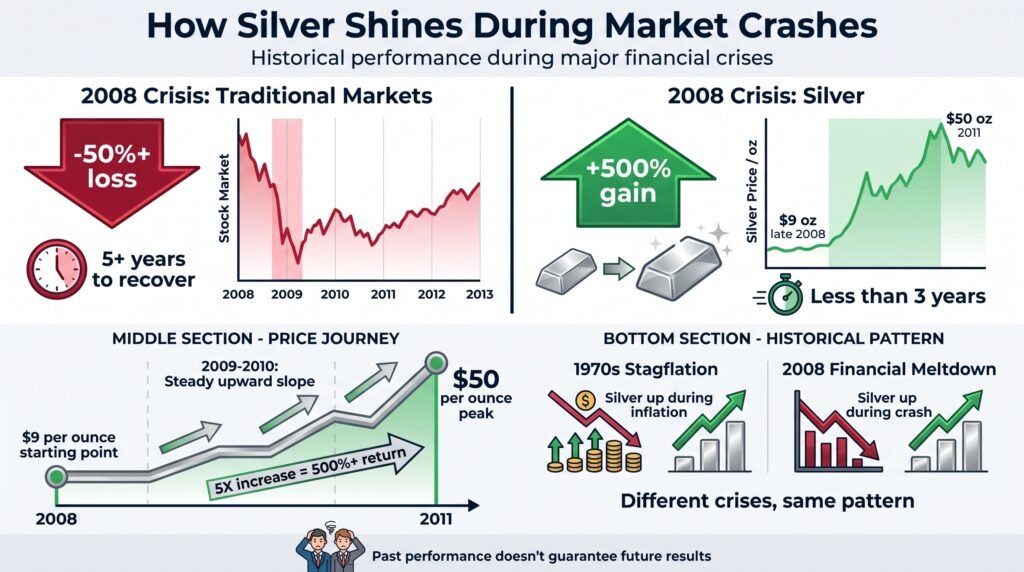
    During the 2008 financial crisis, broader markets lost well over 50% of their value and took more than five years to regain their pre-crisis levels.

    March – October 2008, Silver corrected downward, with markets from a peak of nearly $21 per ounce in March 2008 down to roughly $9 to $10 per ounce by October 2008—a correction of approximately 57%.

    Late 2008 – 2011, in the years that followed, silver more than quintupled in price, climbing from less than $9 per ounce in late 2008 to nearly $50 per ounce by 2011.

    That’s a return of 400-500% in less than three years, a performance that stands in sharp contrast to how long traditional stock portfolios needed just to recover their original value.

    Why Silver Tends to Rise When Markets Struggle

    Silver has built a genuine reputation for increasing in price as broader markets begin performing poorly. This pattern showed up clearly during the stagflation of the 1970s and again during the financial meltdown of 2008, two very different economic environments that nonetheless both favored silver.

    The Importance of Professional Guidance

    Figuring out your exact number doesn’t have to be a solo project. Augusta Precious Metals works with retirement investors every day to build precious metals strategies that match their specific timeline, income needs, and comfort with risk.

    Get started with a tax-advantaged IRA with Augusta by clicking the banner below.

    Silver's role in a retirement portfolio
    Silver’s role in a retirement portfolio

    Silver’s Journey From Pocket Change to Portfolio Asset

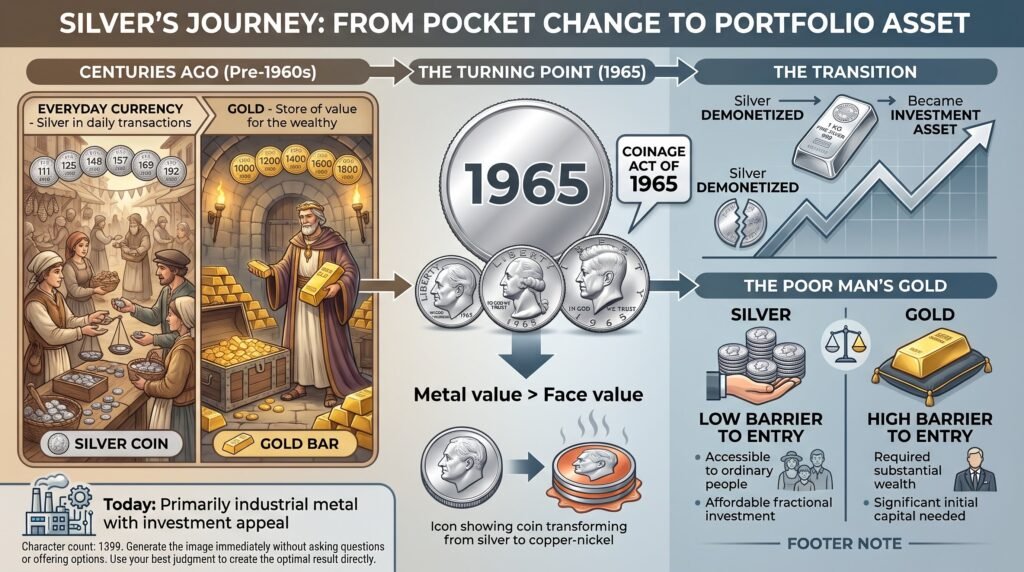
    Silver’s relationship with money runs deeper than most people realize. For centuries, people used silver as actual currency in everyday transactions, while gold stayed largely in the hands of the wealthy as a store of value rather than a medium of exchange.

    That dynamic shaped how silver gets treated even today, as something more accessible and more tied to practical use than gold.

    That history took a sharp turn in the 1960s, and understanding what happened explains why silver behaves so differently from gold in modern markets.

    How the Coinage Act of 1965 Changed Everything

    Under the Coinage Act of 1965, the U.S. government withdrew silver from American coinage as the metal’s price began climbing. Up until that point, dimes, quarters, and half-dollars contained real silver content.

    Once silver prices rose high enough that the metal in the coins became worth more than the coins’ face value, the government had no choice but to phase it out of everyday currency.

    This single legislative decision marked silver’s transition from circulating money into something entirely different: an investment asset.

    After being demonetized, silver’s price rose, and it increasingly took on the characteristics of an investment rather than a currency.

    Why Silver Is Called “The Poor Man’s Gold”

    Silver earned the nickname “the poor man’s gold” precisely because of this historical accessibility.

    While gold required substantial wealth to accumulate meaningfully, silver’s lower price point made it something ordinary people could actually hold and use.

    That nickname still shows up in investment circles today, reflecting silver’s lower barrier to entry compared to gold, even though silver has become far more of an industrial metal than a monetary one in recent decades.

    Read more about how gold belongs in your portfolio for proper diversification, inflation hedging, and more here.

    Find out whether a silver IRA is a good choice for your retirement needs. Access our Silver IRA calculator by clicking the banner below.

    Silver IRA Calculator
    Silver IRA Calculator

    Gold vs. Silver: Picking Your Precious Metal Mix

    Deciding between gold and silver isn’t really an either-or question for most retirees. It’s more a question of proportion, since both metals bring something different to a portfolio.

    Why Central Banks Still Favor Gold

    Gold has long been considered the more established investment metal, in large part because it still carries characteristics of a monetary asset.

    Major central banks around the world hold substantial gold reserves, a practice that reinforces gold’s reputation as the ultimate store of value during times of crisis.

    Silver, by contrast, has become increasingly industrial over the past several decades.

    That shift means silver’s price gets influenced by factors gold rarely has to contend with, like solar panel manufacturing or electric vehicle production volumes.

    How the Two Metals Move Together in Price

    Generally speaking, gold and silver prices tend to rise and fall in tandem, since both respond to many of the same macroeconomic forces, including inflation expectations, currency strength, and investor demand for safe-haven assets.

    That said, silver’s industrial component means it can diverge from gold’s movements at times, sometimes amplifying gold’s trend and sometimes lagging behind it.

    This is exactly why the gold-to-silver ratio becomes such a useful tool, since it captures those moments of divergence.

    A silver and gold IRA is a tax-advantaged means of owning the physical metal without the need or liability of storing it in your own residence.

    Augusta Precious Metals and Birch Gold Group have built relationships with mints around the world specifically to help customers purchase IRA-eligible gold and silver coins directly from their producers, which helps ensure authenticity and compliance with IRS rules from day one.

    Receive a free gold information kit by filling out their short contact form when you click one or both of the banners below.

    Birch Gold Group: Best Gold IRA for Established Trust & Low Fees

    Gold and Silver IRA Info Kit
    Gold IRA Information Kit

    Augusta Precious Metals: Best Gold IRA for Prices & Customer Support

    Frequently Asked Questions

    Silver raises plenty of practical questions once you start considering it for your retirement portfolio. Here are the answers to the ones retirees ask most often.

    These questions cover everything from allocation percentages to tax treatment, giving you a quick reference as you finalize your own silver strategy

    Is silver a good hedge against inflation?

    Silver has historically outpaced inflation during several key periods, including a roughly 95% price increase from 2020 to 2025 compared to a 26% rise in the Consumer Price Index.

    During the stagflation of the 1970s, silver’s average annualized growth rate exceeded 30% while inflation peaked above 13%.

    That said, silver’s inflation-hedging performance isn’t guaranteed in every environment, since its industrial demand component can pull prices in a different direction than inflation alone would suggest.

    What is the gold-to-silver ratio and why does it matter?

    The gold-to-silver ratio measures how many ounces of silver it takes to equal the price of one ounce of gold.

    This ratio normally sits between 50-to-1 and 80-to-1, and readings outside that range can signal whether silver is relatively cheap or expensive compared to gold.

    In early 2020, for example, the ratio climbed to nearly 115-to-1, signaling that silver was unusually inexpensive relative to gold at that moment.

    Are silver mining stocks riskier than physical silver?

    Yes, generally speaking. Mining stocks carry all the risks tied to silver’s price movements, plus additional company-specific risks that have nothing to do with silver itself.

    Labor unrest and operational disruptions
    Foreign government regulation or nationalization.

    Mine exhaustion, or failed exploration efforts
    Environmental catastrophes affecting operations.

    Physical silver avoids all these company-specific risks, which is why it’s generally considered the more conservative way to gain silver exposure.

    How is silver taxed when I sell it?

    If you sell physical silver at a gain after holding it for more than one year, you’ll owe capital gains taxes, which can run as high as 28% since silver is classified as a collectible.

    Silver held inside a properly structured precious metals IRA avoids this capital gains treatment, following standard IRA distribution tax rules instead.

    What happens to silver prices during a recession?

    Silver has a documented tendency to rise during periods of economic or financial instability, as seen during the 1970s stagflation and the 2008 financial crisis, when silver more than quintupled in price over the following years while broader markets took over five years to recover.

    Sources:
    How To Invest In Silver: 2026 Guide – Swiss America

    How to Invest in Silver